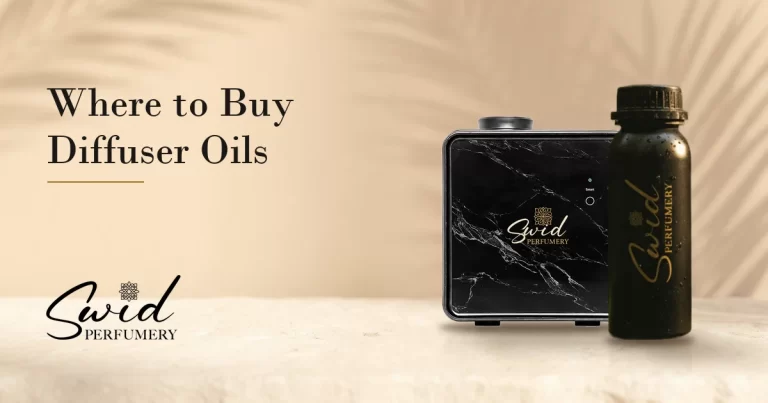
Yes, you can get that hotel-lobby smell at home. Most of it comes from how the scent is spread, not from a secret oil. Hotels use machines that turn fragrance oil into a very fine mist and run them on a schedule. That keeps the scent soft and steady. A hotel scent diffuser for home works the same way, just smaller.
When a customer asks us for a hotel-lobby smell, our team usually points them to Clean Amber: a soft amber with clean musk. Below, we narrow it down to three machines and four scents, so you can pick by room and by taste.
Why hotels smell the way they do
Hotels scent their lobbies on purpose. Some connect a scent system to their air handling, so the same scent reaches every public space. Others use freestanding or wall-mounted units. One hotel scent supplier told a trade magazine the goal: a scent you notice without it being strong, spread evenly through the room.
Where hotels put it matters too. In a study at a luxury hotel in Hong Kong, guests liked the scent in the lobby, corridors and restrooms, but not in their rooms or the restaurants. At home, that means the entryway, living room and bathroom, more than the bedroom at night.
The styles hotels are known for are mostly calm and clean: tea, citrus and bergamot, cedar and other woods, musk, vanilla, amber and fig. Few of them are sweet.
Which kind of diffuser gives a hotel scent?
Type
How it works
Good for
Keep in mind
Waterless (nebulizing)
Turns fragrance oil into a fine mist, with no water or heat
A steady scent through a whole room, the hotel way
Use oil made for it, because thick oils can clog it
Ultrasonic
Mixes a few drops of oil with water into a cool mist
A small room
A softer scent; tap water can add more fine particles than distilled
Reed diffuser
Reeds draw the oil up and it slowly evaporates
A bathroom or a shelf, with no plug
Stays near the bottle; flip the reeds now and then
Room spray
You mist the room by hand
A quick refresh before guests arrive
A burst, not a steady scent
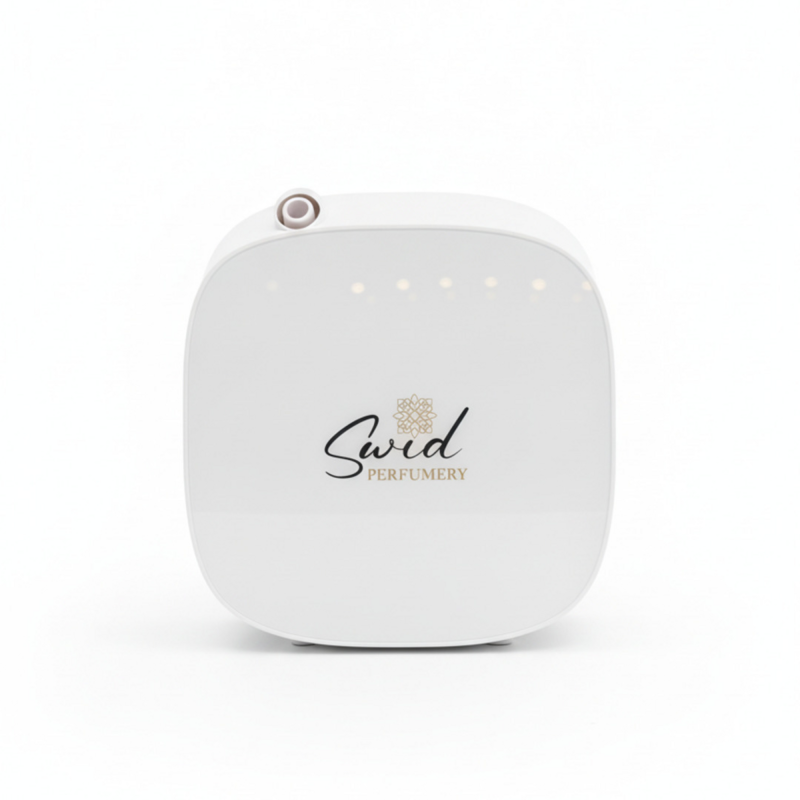
Our diffuser machines are all the waterless kind, so that’s the type to choose for a hotel-style scent. A reed diffuser is the easy option for a bathroom or a shelf, and our Premium Diffuser Oil refills it.
Which hotel scent diffuser fits your room?
Coverage figures come from each machine’s maker, so treat them as a guide.
Living room or open-plan space: the Luxury Scent Diffuser Machine covers about 50 m² (538 ft²) and comes with a 30 ml bottle of SWID oil, so you can start right away.
Living room or bedroom, in the evening: the A974 tower has a soft fabric cover and a candle-like light, one knob with three levels, and covers about 77.5 m² (834 ft²).
Hallway, bathroom or small room with no outlet nearby: the A1-V3.1 runs on one D-size battery or USB, hangs on the wall, and lets you set a schedule in its app. It covers about 30 m² (323 ft²).
Scenting a whole house or a shop? The A316 is made for large spaces. The A-H333S connects to central air ducts, the way some hotels scent every room at once.
Four scents for a hotel feel at home
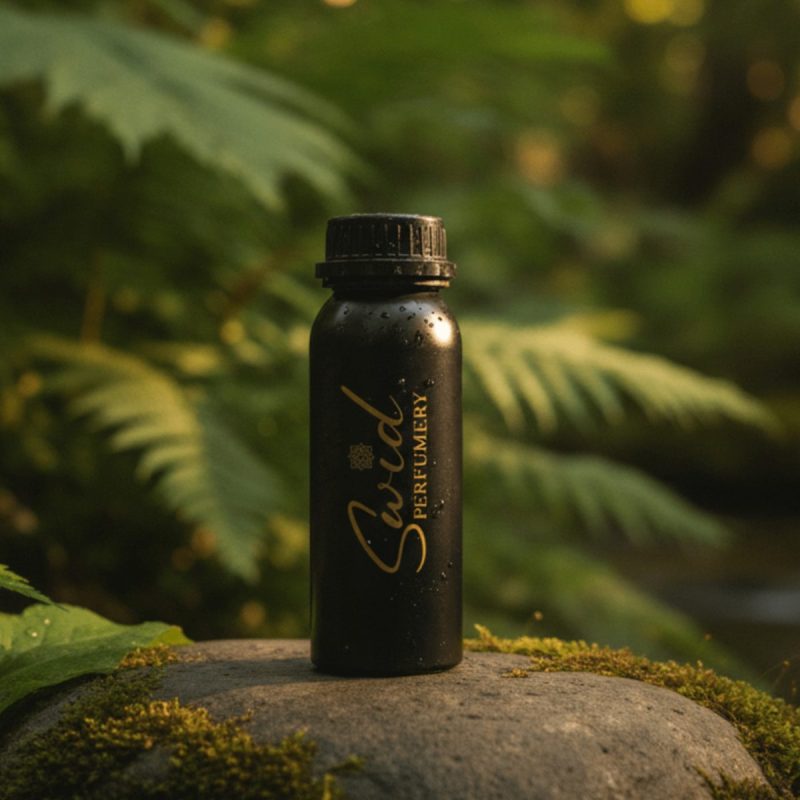
All of these come in our 200 ml Premium Diffuser Oil, which works in our machines as well as in reed diffusers. You can read the notes for all 32 scents in our Oil Library. Using another brand’s machine? Check its manual for the oils it takes.
Clean Amber: a soft amber with clean musk. It’s the one our team usually suggests for a hotel-lobby smell. Skip it if warm, ambery scents feel heavy to you.
Address: fresh bergamot and citrus over cedar, patchouli and amber. Choose it if you want the room to feel fresh first and warm underneath.
Luxury: cedarwood and cedar over a patchouli base. A dry, woody choice for anyone who finds sweet room scents too much.
Citrus & Vetiver: fresh citrus over earthy vetiver. The lightest of the four, for kitchens, offices and daytime.
Rather not choose? Our Luxury Diffuser Oil comes in one rich scent, in 30, 50 or 100 ml. We don’t publish a note list for it, so smell it in the store first if you can.
How to run your diffuser for a hotel scent
Put it where the air moves. Diffuser makers suggest a spot where air flows through the room, away from open windows, doors and vents that carry the scent straight out.
Start low. Begin on the lowest setting and raise it over a few days. Hotels aim for a scent you notice without it being strong.
Use the timer. Run it in on-and-off cycles and switch it off once the room smells right, rather than all day and all night.
Don’t trust your own nose. After a while, you stop noticing a scent you live with. That’s normal, and it doesn’t mean the diffuser stopped working. Before you turn it up, ask someone who just walked in.
Let fresh air in. The EPA suggests more ventilation when you use products that release scent into the air.
Pets, kids and sensitive noses
Vets advise care with diffusers around pets. The ASPCA, the Pet Poison Helpline and Texas A&M’s vet school warn that diffused oils can irritate a cat’s airways. Droplets can also settle on fur and be licked off. The ASPCA advises against diffusers in homes with birds. Their guidance is written about essential oils, and we found no source saying fragrance oils are any safer.
Most people are fine around a room scent, but some people with asthma or a sensitivity to fragrance react to it.
Keep the machine and the oil where pets and children can’t reach them or knock them over.
Give pets a room without scent.
Keep it low, or off, when someone with breathing problems is home.
No. They turn the fragrance oil itself into a fine mist, so there is no water to fill or empty.
Can I use the Premium Diffuser Oil in a diffuser machine?
Yes. Our Premium Diffuser Oil and Luxury Diffuser Oil both work in our waterless machines, and Premium Diffuser Oil also refills reed diffusers.
Why can’t I smell my diffuser anymore?
Your nose gets used to a scent you live with, so you notice it less over time. Guests usually still smell it. Ask someone before you turn it up.
Which scent smells most like a hotel lobby?
It depends on the hotel, but when customers ask us for that smell, our team usually suggests Clean Amber. If you prefer fresh scents, try Address or Citrus & Vetiver.
Sources and notes
Hotel scenting: Fortune, LODGING magazine, the Harvard Gazette and Skift, plus the Hong Kong hotel study by Denizci Guillet, Kozak and Kucukusta (International Journal of Hospitality & Tourism Administration). Hotel scent styles: Marriott, Tatler Asia, Euronews and The 50. Diffuser types and placement: Organic Aromas and AromaTech (diffuser makers), Livingetc, and a study of ultrasonic diffusers in Indoor Air. Getting used to a scent: research in Physiology & Behavior and Perception & Psychophysics. Safety: the ASPCA, the Pet Poison Helpline, Texas A&M Veterinary Medicine, the Merck Veterinary Manual, the US EPA, the American Lung Association and the Allergy & Asthma Network. All read on November 20, 2026. Machine coverage figures come from each maker. Scent notes come from our Oil Library.
 Luxury Fragrance House